New Prince Shri Bhavani College of Engineering and Technology
The Department of Computer Science & Engineering (Cyber Security) functions as a specialized hub that blends core computer science education with advanced training in data protection, network security, cryptography, and emerging technologies like AI and blockchain. It prepares students to safeguard digital systems while fostering innovation, research, and industry readiness. It functions as both a knowledge hub and innovation centre, equipping students with technical expertise, research skills, and industry exposure to thrive in the fast-evolving digital security landscape.
With the rapid growth of technology, the department focuses on equipping future engineers with the skills to detect, prevent, and respond to cyber threats while fostering innovation in secure systems design.
The department is well equipped with advanced tools for penetration testing, digital forensics, and malware analysis. It train the students with practical exposure to cybercrime investigation and recovery techniques. Regular sessions on ethical hacking, cyber law and emerging threats creates awareness on safe internet practices and digital literacy.
Graduates of the department have excelled in roles such as security analysts, ethical hackers, forensic experts, and researchers. Alumni contribute to strengthening cyber resilience in industries ranging from finance and healthcare to defense and government.
The department functions as a hub of innovation and vigilance, shaping engineers into skilled professionals who safeguard digital assets and contribute to a secure technological future.
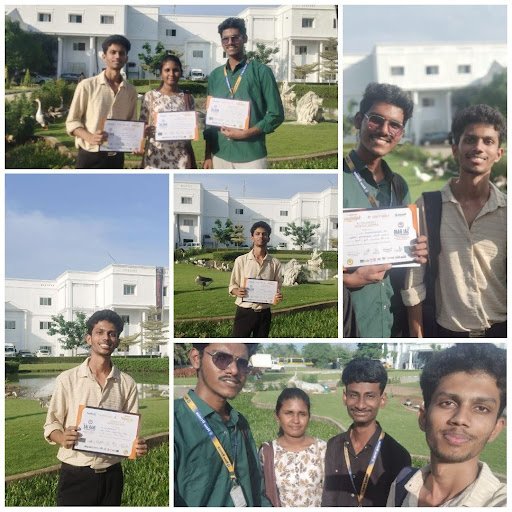
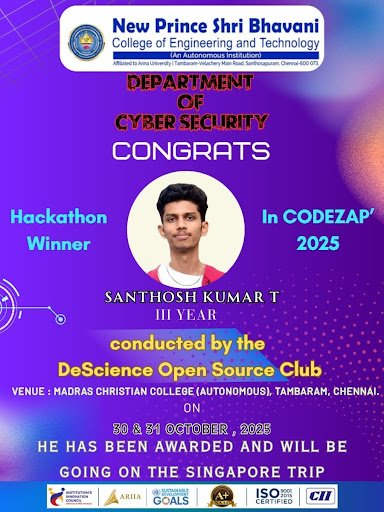
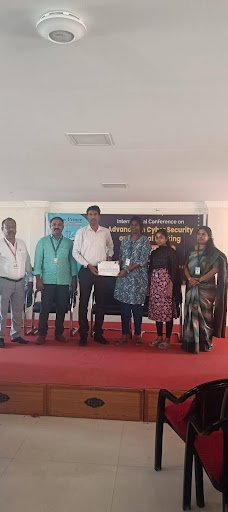
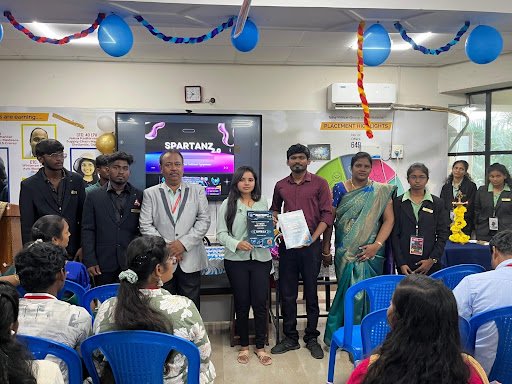
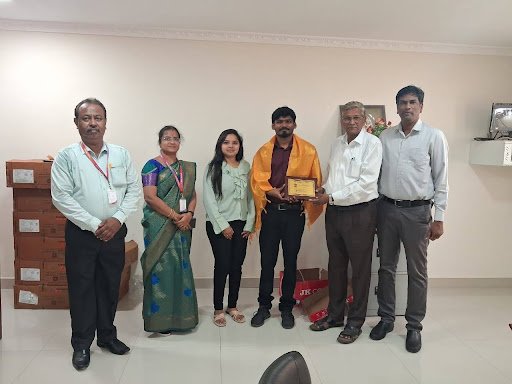
Santosh Kumar, a III Year student of the Department of Computer Science and Engineering (Cyber Security), secured a prize in the Hackathon competition. The event was held on 30th and 31st October 2025 at Madras Christian College, Chennai. He has been awarded and selected for a trip to Singapore
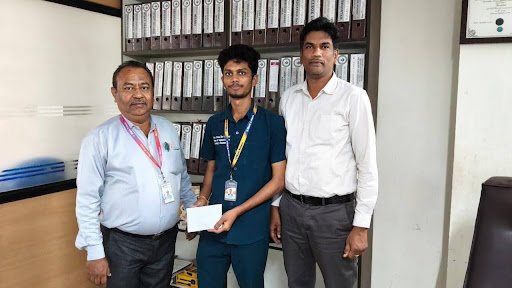
Dr. K. Kiruthigadevi received the Best Inspirational Leadership Faculty Award in recognition of exceptional dedication to teaching, student mentorship, and academic leadership. The award was presented by the Hon’ble Chief Minister of Puducherry, Thiru. N. Rangasamy, at the Top Engineers award ceremony. This honor highlights her outstanding contribution to inspiring students and promoting excellence in technical education.
The Department of Computer Science and Engineering (Cyber Security) is committed to delivering quality technical education that integrates strong theoretical foundations with practical, industry-oriented learning. Our objective is to nurture competent professionals who are technically proficient, ethically responsible, and capable of addressing real-world challenges in the rapidly evolving domain of computing and cyber security.
The department emphasizes outcome-based education through innovative teaching methodologies, hands-on laboratory sessions, industry interaction, value-added courses, and student-centric activities. We actively encourage research, entrepreneurship, and continuous skill development to ensure that our students meet current industry standards and societal needs.
Dr. R. Balamurugan, M.Tech., Ph.D.
Professor & Head
Department of Computer Science and Engineering (Cyber Security)
New Prince Shri Bhavani College of Engineering & Technology
Vengaivasal Main Road, Gowrivakkam, Chennai – 600073.
The Department of Computer Science & Engineering (Cyber Security) functions as a specialized hub that blends core computer science education with advanced training in data protection, network security, cryptography, and emerging technologies like AI and blockchain. It prepares students to safeguard digital systems while fostering innovation, research, and industry readiness. It functions as both a knowledge hub and innovation centre, equipping students with technical expertise, research skills, and industry exposure to thrive in the fast-evolving digital security landscape.
With the rapid growth of technology, the department focuses on equipping future engineers with the skills to detect, prevent, and respond to cyber threats while fostering innovation in secure systems design.
The department is well equipped with advanced tools for penetration testing, digital forensics, and malware analysis. It train the students with practical exposure to cybercrime investigation and recovery techniques. Regular sessions on ethical hacking, cyber law and emerging threats creates awareness on safe internet practices and digital literacy.
Graduates of the department have excelled in roles such as security analysts, ethical hackers, forensic experts, and researchers. Alumni contribute to strengthening cyber resilience in industries ranging from finance and healthcare to defense and government.
The department functions as a hub of innovation and vigilance, shaping engineers into skilled professionals who safeguard digital assets and contribute to a secure technological future.
PO1: Engineering Knowledge: Apply knowledge of mathematics, natural science, computing, engineering fundamentals and an engineering specialization as specified in WK1 to WK4 respectively to develop to the solution of complex engineering problems.
PO2: Problem Analysis: Identify, formulate, review research literature and analyze complex engineering problems reaching substantiated conclusions with consideration for sustainable development. (WK1 to WK4)
PO3: Design/Development of Solutions: Design creative solutions for complex engineering problems and design/develop systems/components/processes to meet identified needs with consideration for the public health and safety, whole-life cost, net zero carbon, culture, society and environment as required. (WK5)
PO4: Conduct Investigations of Complex Problems: Conduct investigations of complex engineering problems using research-based knowledge including design of experiments, modelling, analysis & interpretation of data to provide valid conclusions. (WK8)
PO5: Engineering Tool Usage: Create, select and apply appropriate techniques, resources and modern engineering & IT tools, including prediction and modelling recognizing their limitations to solve complex engineering problems. (WK2 and WK6)
PO6: The Engineer and The World: Analyze and evaluate societal and environmental aspects while solving complex engineering problems for its impact on sustainability with reference to economy, health, safety, legal framework, culture and environment. (WK1, WK5, and WK7)
PO7: Ethics: Apply ethical principles and commit to professional ethics, human values, diversity and inclusion; adhere to national & international laws. (WK9)
PO8: Individual and Collaborative Team work: Function effectively as an individual, and as a member or leader in diverse/multi-disciplinary teams.
PO9: Communication: Communicate effectively and inclusively within the engineering community and society at large, such as being able to comprehend and write effective reports and design documentation, make effective presentations considering cultural, language, and learning differences
PO10: Project Management and Finance: Apply knowledge and understanding of engineering management principles and economic decision-making and apply these to one’s own work, as a member and leader in a team, and to manage projects and in multidisciplinary environments.
PO11: Life-Long Learning: Recognize the need for, and have the preparation and ability for i) independent and life-long learning ii) adaptability to new and emerging technologies and iii) critical thinking in the broadest context of technological change.
PSO1: Expertise to design varying complexity with help of cryptography, web development, deep learning by adhering software development life cycle.
PSO2: Proficiency to develop data, resource, and asset protection strategies for organizations, processes, people, and individuals through Cyber Security-centric skills.
PE01: Skilled Cyber Security entrepreneurs, use their knowledge for building a safe and secure digital world.
PEO2: Apply skills to develop innovative solutions for evolving digital challenges in Cyber Security.
PEO3: Uphold ethical standards, contributing responsibly to Cyber Security and staying updated with the latest technologies.
• Emerge as To develop into a renewed reputable department for generating globally competent Computer Science Engineers dedicated to societal progress.
• Infrastructure and Curriculum Development: Excellent infrastructure and innovative curriculum to meet global requirements.
.
• Skill Development: Organize workshops, seminars, and hands-on training sessions to equip students with the required technical skills. Also emphasize the development of soft skills like communication, leadership, and teamwork.
• Research, Innovation, and Collaboration: Encourage students and faculty to engage in ground-breaking research and innovative projects in association with Industry.