New Prince Shri Bhavani College of Engineering and Technology
The Department of Artificial Intelligence and Data Science (AI&DS) offers a four-year program, designed to provide strong foundations in programming, algorithms, mathematics, and specialized courses in machine learning, deep learning, natural language processing (NLP), computer vision, and big data analytics.
With the rapid growth of AI, machine learning, and big data, the department focuses on equipping students with the skills to analyze, design, and develop intelligent systems that address real-world challenges across industries. Through rigorous academics, advanced laboratories, industry partnerships, and research initiatives, the department prepares graduates for successful careers in frontier domains.
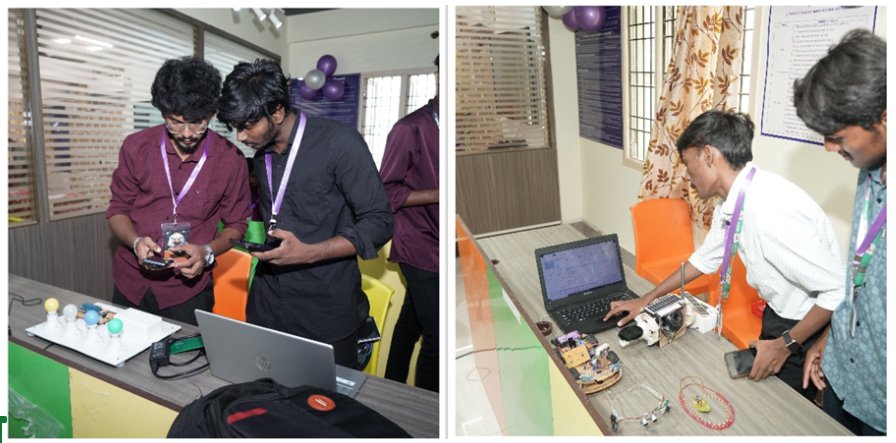
The department is equipped with high-performance computing systems and tools for model training and deployment. The students have hands-on training in cloud platforms, IoT applications, and edge computing. Internships, collaborative projects, training programs with IT firms and startups promote digital literacy, AI awareness, and social impact projects.
Faculty members are specialized in machine learning, cryptography, databases, algorithms, web technology, and computer networks. Many are actively engaged in publishing research papers, filing patents, and guiding student projects in emerging AI domains.
Graduates of the department have excelled in careers as data scientists, AI engineers, machine learning specialists, and researchers. Alumni contribute to industries such as finance, healthcare, e-commerce, and defense, reflecting the department’s strong academic and practical foundation.
In brief, the department functions as a hub of innovation and future-focused learning, shaping engineers into skilled professionals who harness the power of AI and data to transform industries and society.
As the Head of the Department of Artificial Intelligence and Data Science, it is my pleasure to highlight the vision and strengths of our department at New Prince Shri Bhavani College of Engineering and Technology. Established in 2023, the department was founded with the objective of delivering quality, industry-relevant education in the rapidly evolving fields of artificial intelligence and data science. Our department is fully equipped with modern laboratories, high-speed internet facilities, and a dedicated departmental library that support effective teaching, learning, and research. The curriculum is thoughtfully designed to provide students with a strong foundation in mathematics, computing fundamentals, artificial intelligence, data science, machine learning, and allied domains, enabling them to meet real-world technological challenges with confidence.
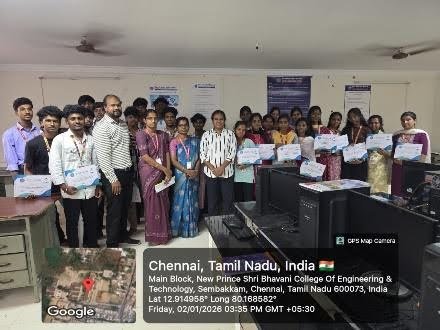
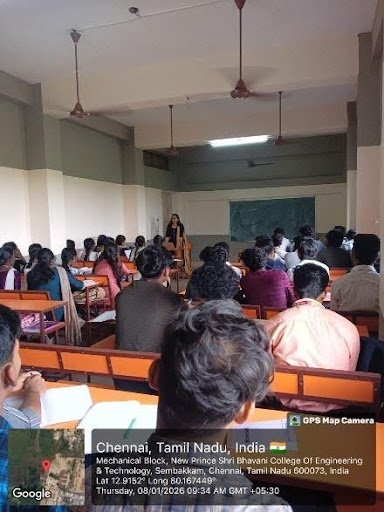
Our department is supported by a team of qualified and committed faculty members who actively engage in teaching, research, and industry interaction. Emphasis is placed on experiential learning through laboratory work, projects, internships, and industry-oriented activities. Students are encouraged to participate in workshops, hackathons, certifications, technical competitions, and research initiatives to enhance their technical and professional skills. In addition to academic excellence, the department promotes ethical values, teamwork, communication skills, and lifelong learning. With a strong focus on innovation, employability, and societal relevance, the Department of Artificial Intelligence and Data Science strives to nurture competent graduates who can excel in industry, higher education, research, and entrepreneurial endeavors, contributing meaningfully to technological advancement and societal development.
Dr. S. Brintha Rajakumari, M.E.,Ph.D.,
Professor & Head
Department of Artificial Intelligence and Data Science
New Prince Shri Bhavani College of Engineering & Technology
Vengaivasal Main Road, Gowrivakkam, Chennai – 600073.
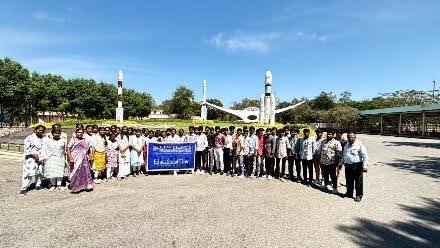
Students from the Department of Artificial Intelligence and Data Science visited Sriharikota, where they gained practical exposure to real-world space research and advanced technological applications.
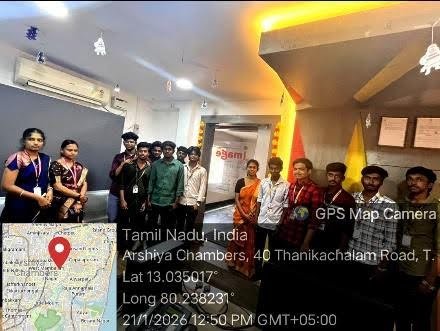
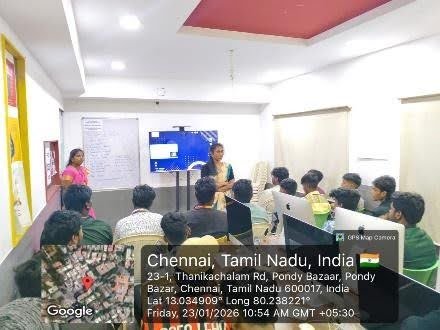
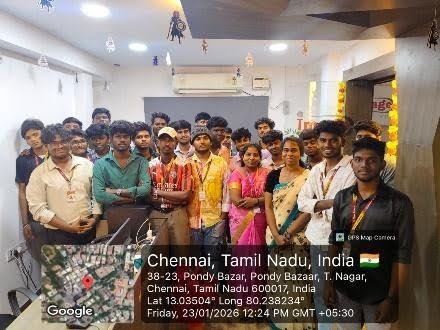
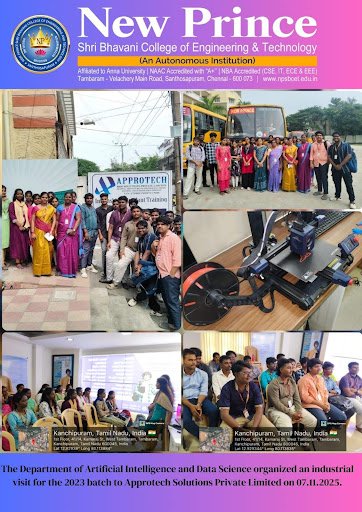
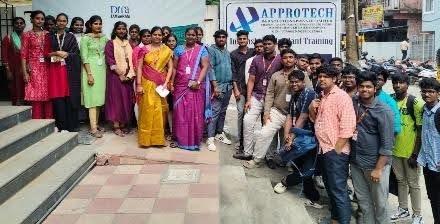
The 2023 Batch students visited Approtech Solutions Private Limited on 07.11.2025 as part of an industrial visit. The visit provided valuable insights into real-world industry practices and emerging technologies. It enhanced students’ practical knowledge and understanding of professional work environments.
PO1: Engineering Knowledge: Apply knowledge of mathematics, natural science, computing, engineering fundamentals and an engineering specialization as specified in WK1 to WK4 respectively to develop to the solution of complex engineering problems.
PO2: Problem Analysis: Identify, formulate, review research literature and analyze complex engineering problems reaching substantiated conclusions with consideration for sustainable development. (WK1 to WK4)
PO3: Design/Development of Solutions: Design creative solutions for complex engineering problems and design/develop systems/components/processes to meet identified needs with consideration for the public health and safety, whole-life cost, net zero carbon, culture, society and environment as required. (WK5)
PO4: Conduct Investigations of Complex Problems: Conduct investigations of complex engineering problems using research-based knowledge including design of experiments, modelling, analysis & interpretation of data to provide valid conclusions. (WK8)
PO5: Engineering Tool Usage: Create, select and apply appropriate techniques, resources and modern engineering & IT tools, including prediction and modelling recognizing their limitations to solve complex engineering problems. (WK2 and WK6)
PO6: The Engineer and The World: Analyze and evaluate societal and environmental aspects while solving complex engineering problems for its impact on sustainability with reference to economy, health, safety, legal framework, culture and environment. (WK1, WK5, and WK7)
PO7: Ethics: Apply ethical principles and commit to professional ethics, human values, diversity and inclusion; adhere to national & international laws. (WK9)
PO8: Individual and Collaborative Team work: Function effectively as an individual, and as a member or leader in diverse/multi-disciplinary teams.
PO9: Communication: Communicate effectively and inclusively within the engineering community and society at large, such as being able to comprehend and write effective reports and design documentation, make effective presentations considering cultural, language, and learning differences
PO10: Project Management and Finance: Apply knowledge and understanding of engineering management principles and economic decision-making and apply these to one’s own work, as a member and leader in a team, and to manage projects and in multidisciplinary environments.
PO11: Life-Long Learning: Recognize the need for, and have the preparation and ability for i) independent and life-long learning ii) adaptability to new and emerging technologies and iii) critical thinking in the broadest context of technological change.
PSO1: The ability to conceptualise, formulate, design, analyse and create solutions underpinning the knowledge of human cognition, Digital-Computational technologies, Artificial Intelligence and Data Science in terms of real-world problems to contribute to sustainable progress of mankind at large
PSO2: Proficiency to develop data, resource, and asset protection strategies for organizations, processes, people, and individuals through Artificial Intelligence and Data Science -centric skills.
PEO1: Graduate will be able to solve real-time problems using analytical skills acquired in the field of Artificial Intelligence and Data Science.
PEO2: Graduate will be able to exhibit professional ethics and moral value with capability of working as an individual and as a team to contribute to further the cause of industry and society
PEO3: Graduates will be able to innovate and adapt new technologies of AI & DS in their chosen field of profession.
• To build an ecosystem to contribute to society by producing leaders in Artificial Intelligence and Data Science through education and research.
• Train the students in the state-of-the-art technologies of AI&DS
.
• Sensitize students to solve societal issues through AI techniques by inculcating values and ethics..
• Enhance employability and entrepreneurial skills in the field of AI & DS.
•
Foster research aptitude among the students through project-based learning.