New Prince Shri Bhavani College of Engineering and Technology
The Department of Computer Science and Engineering, established in 2008, has emerged as a centre of excellence, imparting in-depth technical knowledge while fostering innovation and research through state-of-the-art computing facilities. The department is equipped with the latest hardware and software, enabling students to gain extensive hands-on experience in software design, coding, testing, deployment, and overall programming proficiency.
A team of highly qualified and experienced faculty members from reputed institutions form the backbone of the department. Their expertise spans diverse domains including Machine Learning, Databases, Artificial Intelligence, Design and Analysis of Algorithms, Compiler Design, Web Technology, Cryptography, and Computer Networks.
The department actively promotes academic excellence and research by providing ample opportunities and resources for both faculty and students. Many faculty members have contributed significantly to the field through publications in reputed journals, conference proceedings, and scholarly articles, thereby strengthening the department’s reputation as a hub of knowledge creation and dissemination.
Over the years, the Department of Computer Science and Engineering has produced many brilliant graduates who have secured prestigious positions both in India and abroad. Faculty members consistently encourage students to undertake projects in emerging research areas, thereby enhancing their knowledge of advanced topics. NPSBCET takes pride in its excellent placement record, with the CSE department leading in terms of successful placements.
Looking ahead, the department’s research initiatives are focused on cutting-edge domains such as Machine Learning, Cryptography and Information Extraction, Artificial Intelligence, Software Engineering, Image Processing and Computer Vision, Pattern Recognition, Data and Web Mining, Semantic Web, Natural Language Processing (NLP), and Data Analytics.
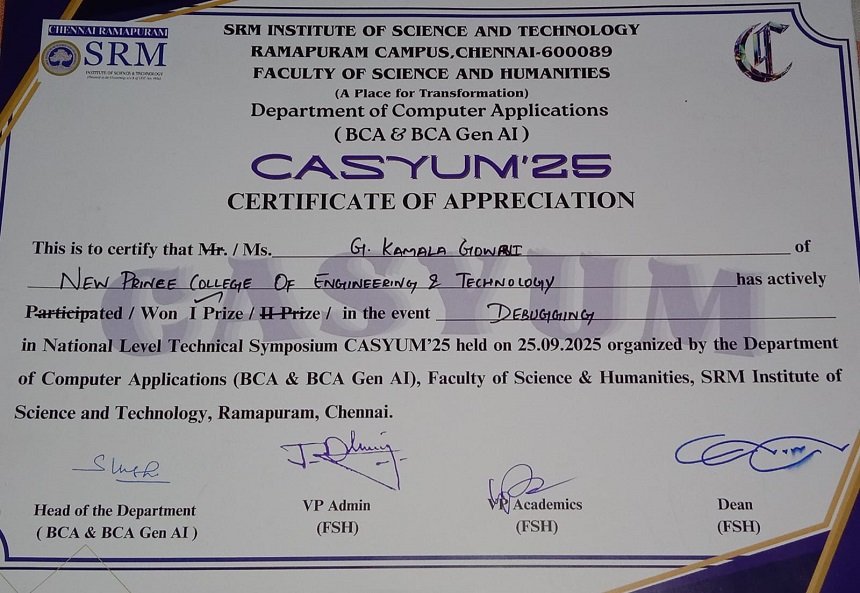
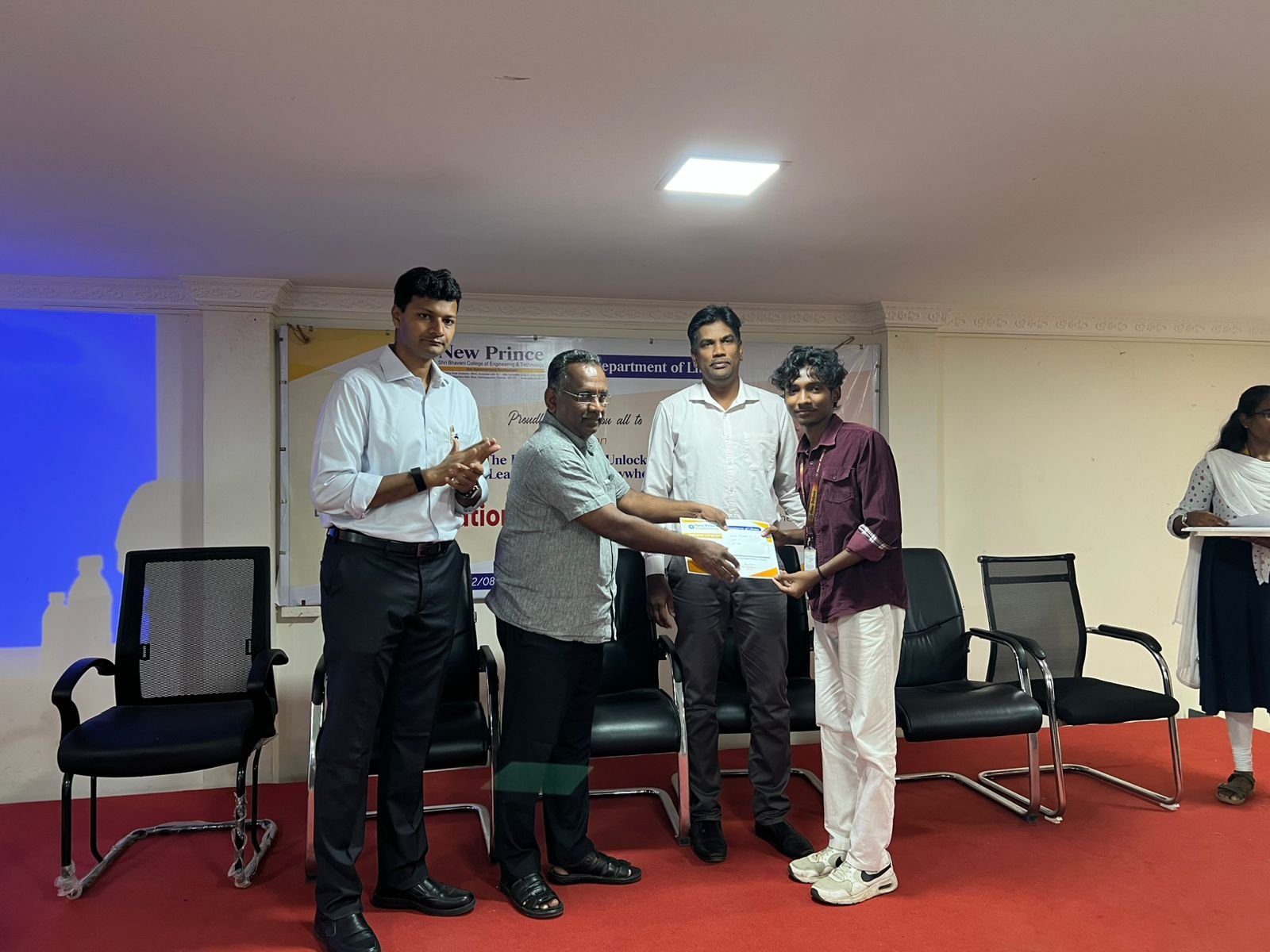
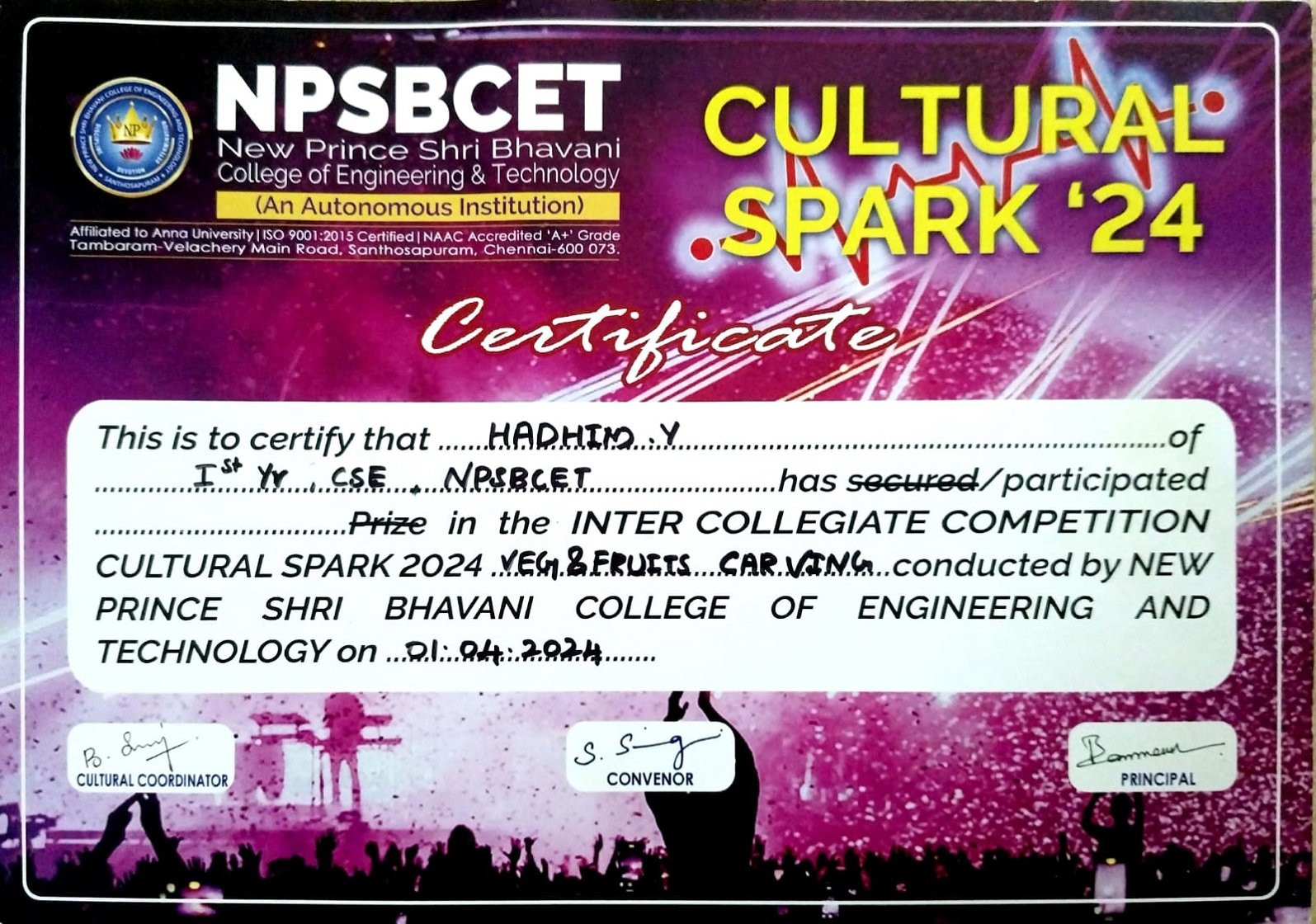
Beyond classroom teaching and laboratory work, students are motivated through creative activities, cultural fests, group learning sessions, and seminars. They are also encouraged to present term papers individually, fostering confidence and independent thinking. Emphasis is placed on computer-based assignments involving modeling and simulation, ensuring practical application of theoretical concepts.
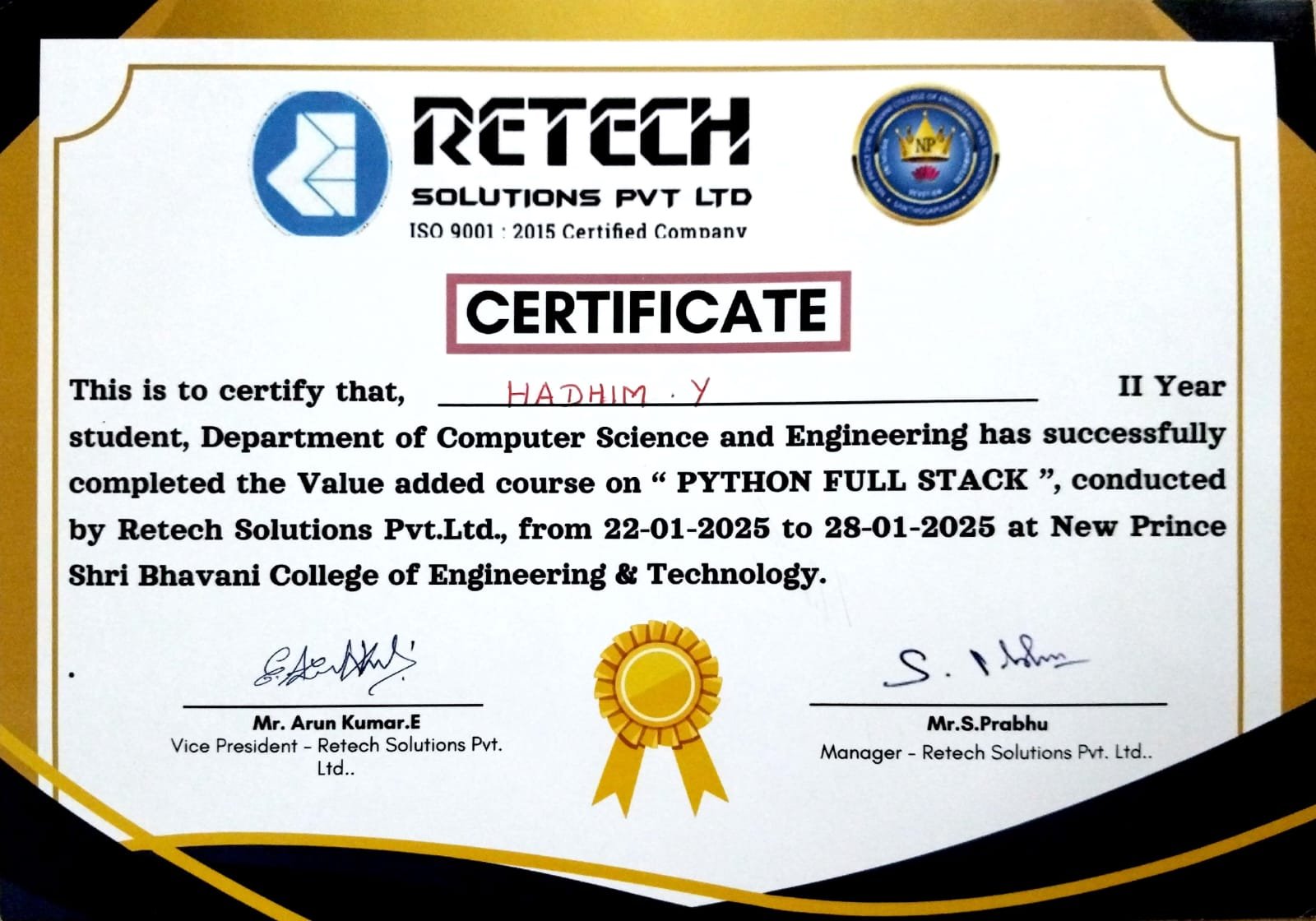
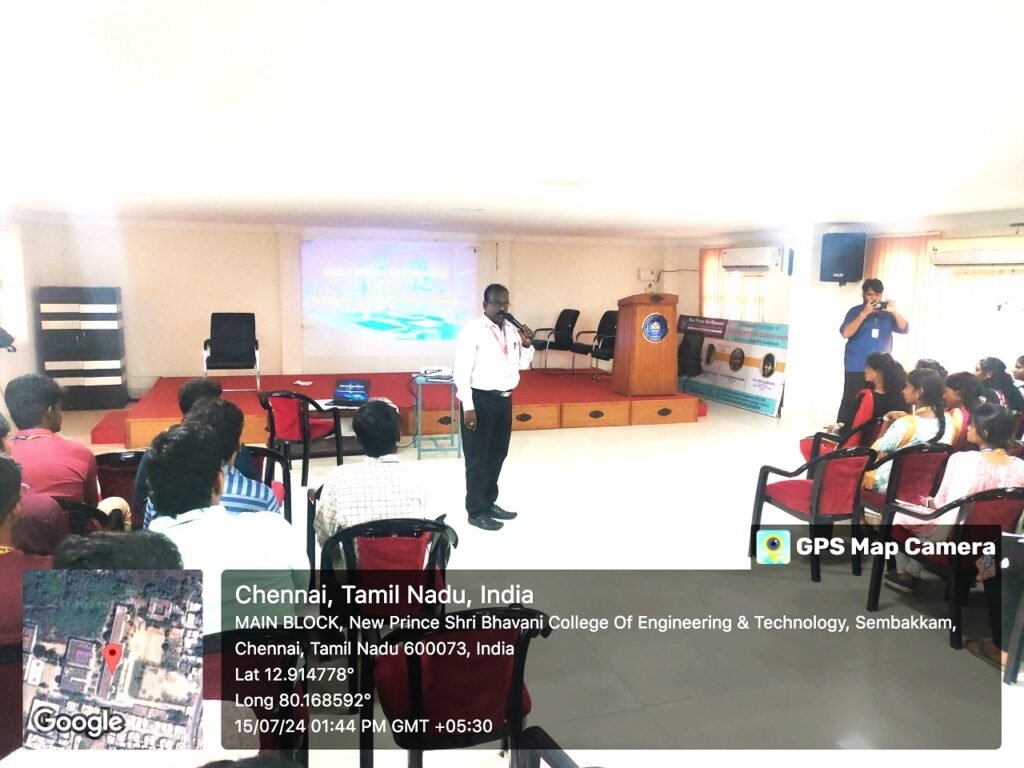
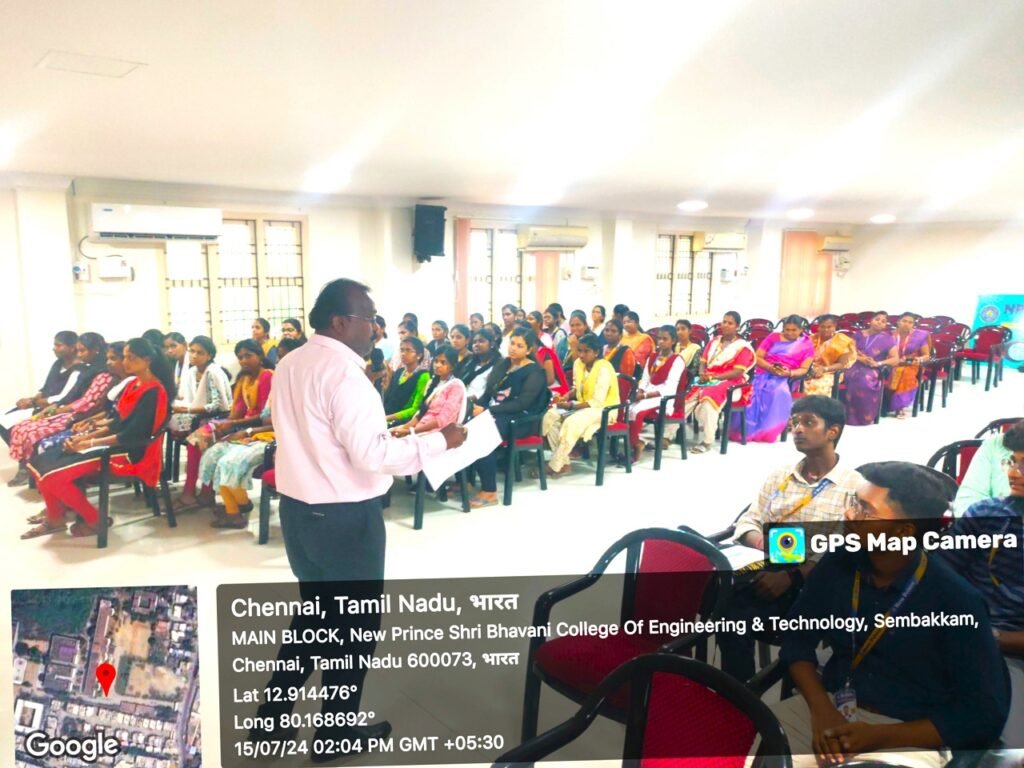
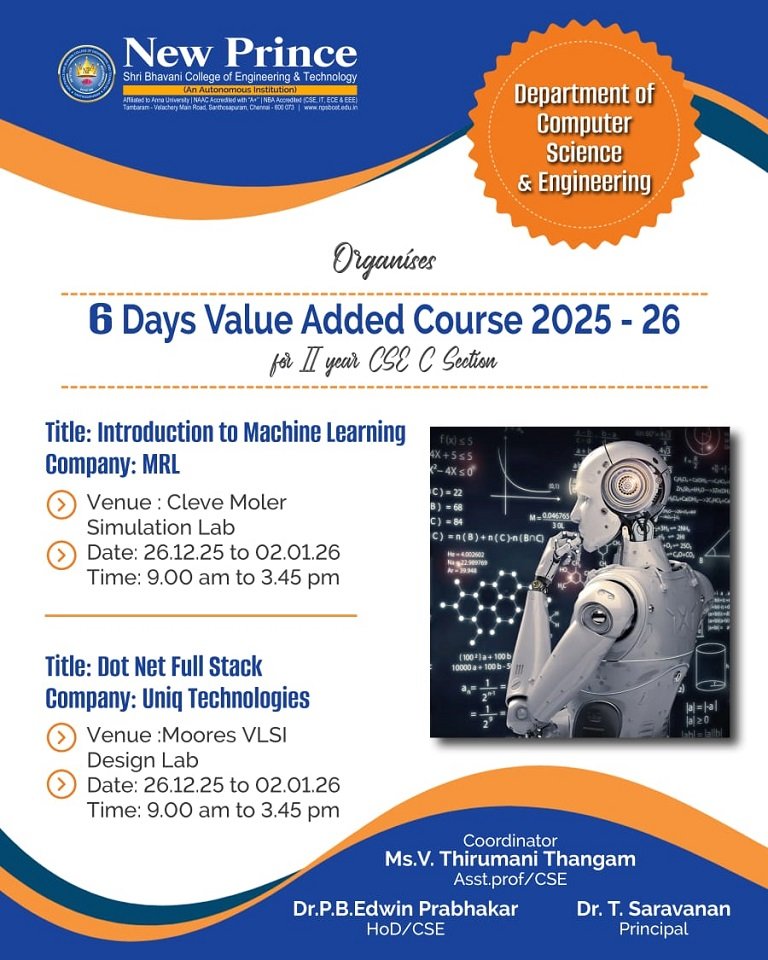
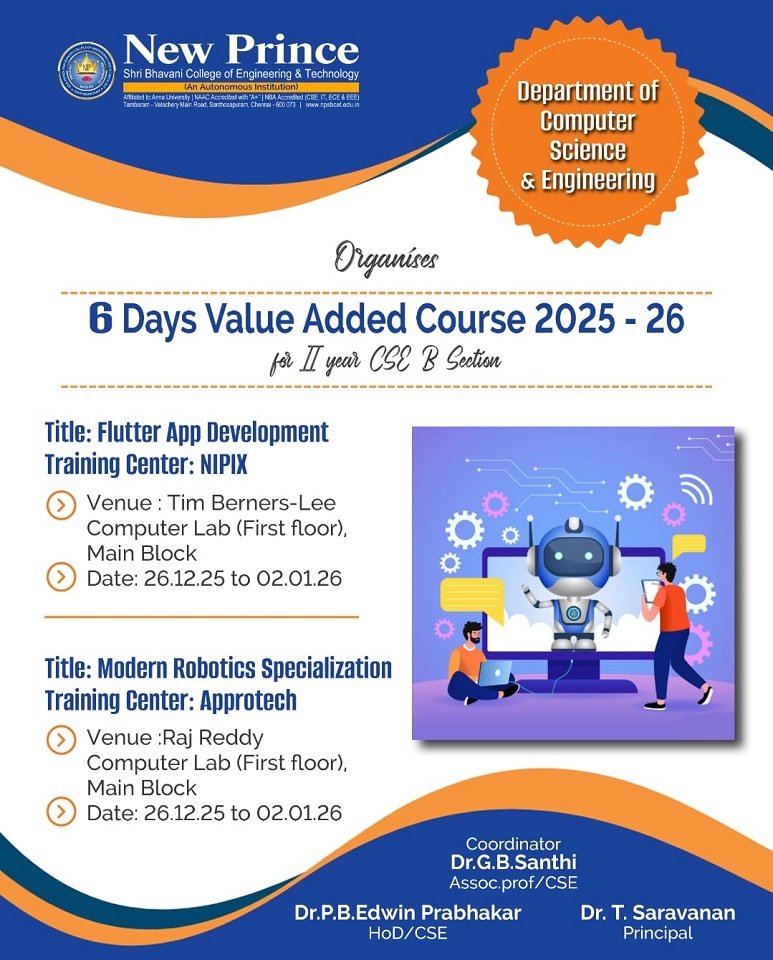
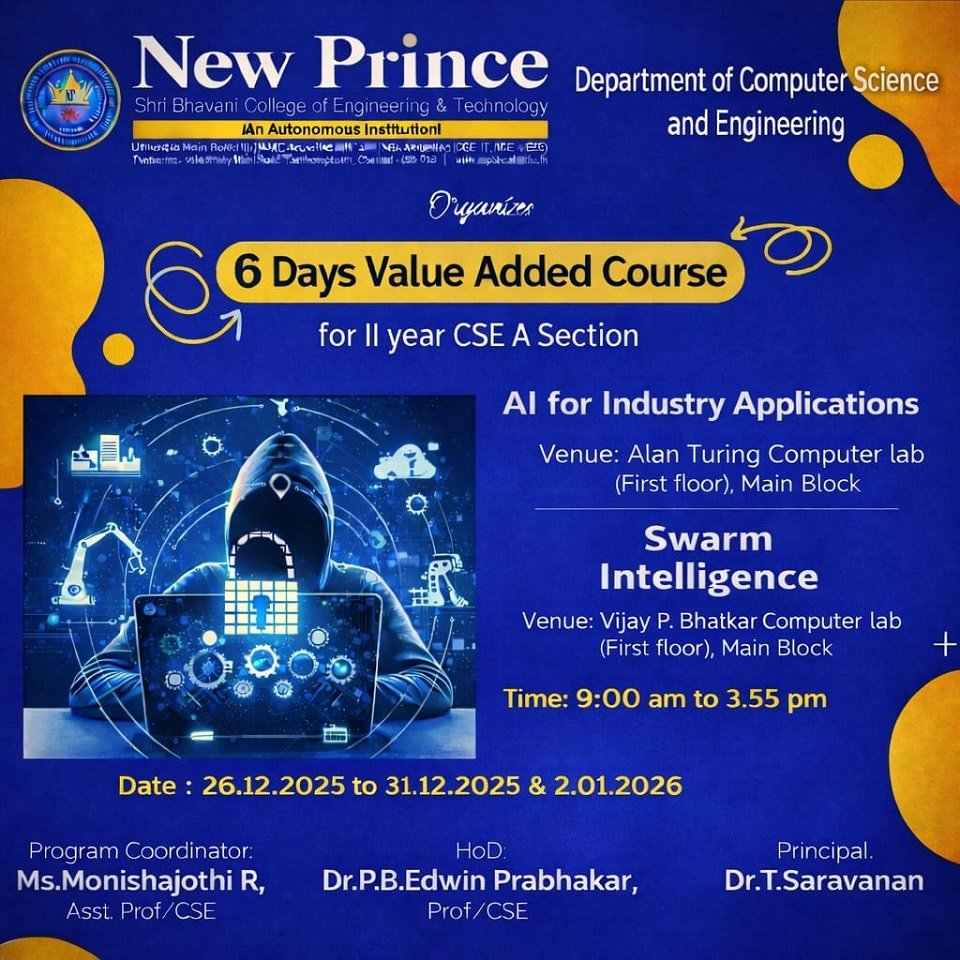
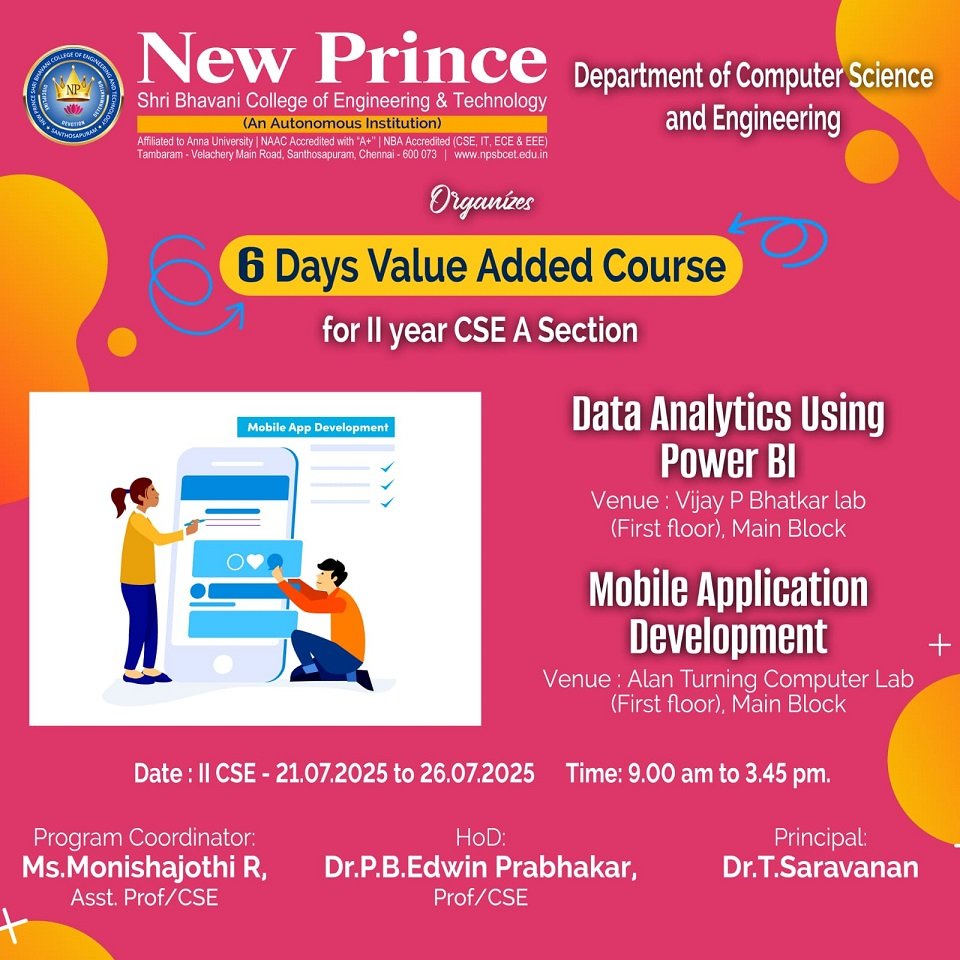
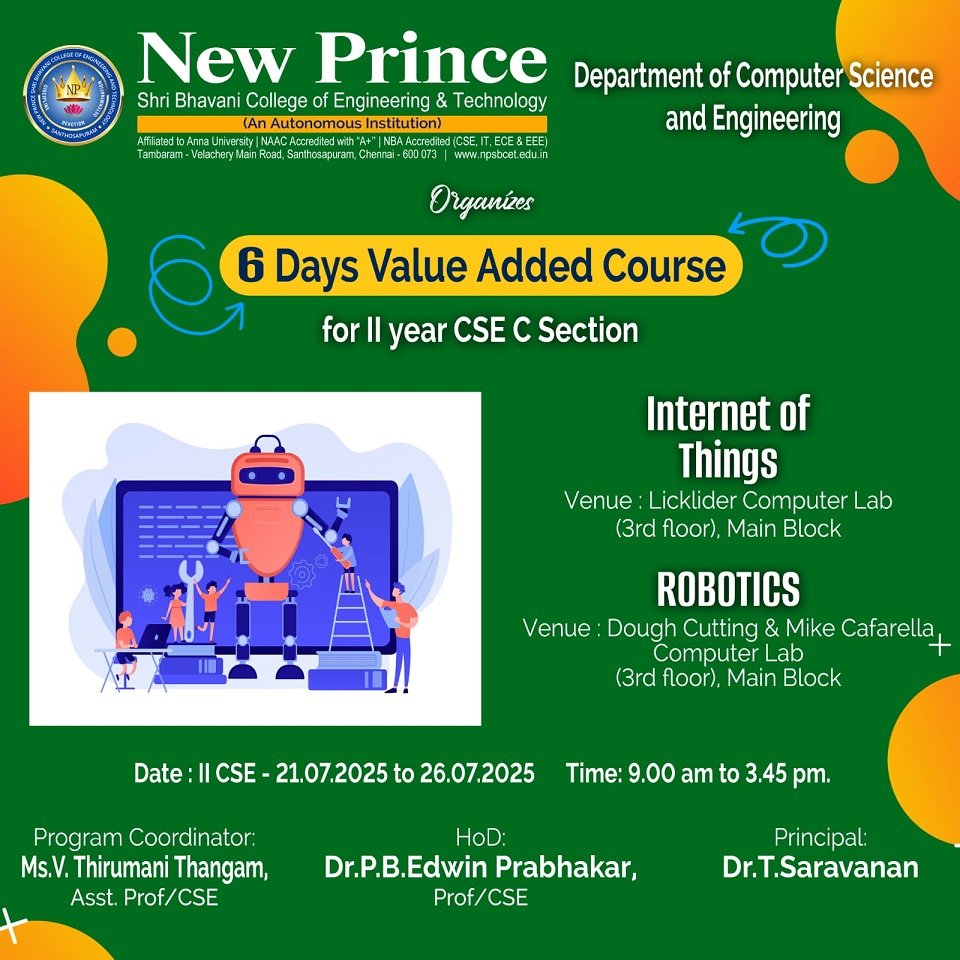
The department regularly organizes National Conferences, Seminars, Student Symposia, Short-Term Training Programs, and Value-Added Courses, offering a wide range of opportunities for faculty and students to showcase their potential and innovative skills. Workshops and seminars on current trends in computer technology further enrich the academic environment, keeping students and faculty aligned with industry advancements.
Welcome to the Department of B.E. Computer Science and Engineering at NPSBCET.
Our department is committed to developing competent and socially responsible computing Dr.P.B.Edwin Prabhakar Professor & Head professionals. We focus on building strong problem-solving skills and preparing students to design and develop modern hardware and software systems through an advanced and industry-oriented curriculum.
Established in 2008, the department continuously adapts to rapid technological changes and provides students the flexibility to shape their careers based on their interests. We offer B.E. Computer Science and Engineering along with Minor Degree programs in Full Stack Development.
Our experienced faculty specialize in emerging areas such as Artificial Intelligence, Machine Learning, Cloud Computing, IoT, Cyber Security, Computer Vision, and Full Stack Development. We support students through strong mentoring, modern laboratories, industry collaborations, and participation in hackathons, conferences, and professional bodies like IEEE, CSI, and ISTE.
We strive to promote research, innovation, and entrepreneurship, helping students build successful careers in the competitive global technology landscape.
Dr.P.B.Edwin Prabhakar , M.Tech., Ph.D.
Professor & Head
Department of Computer Science and Engineering
New Prince Shri Bhavani College of Engineering and Technology
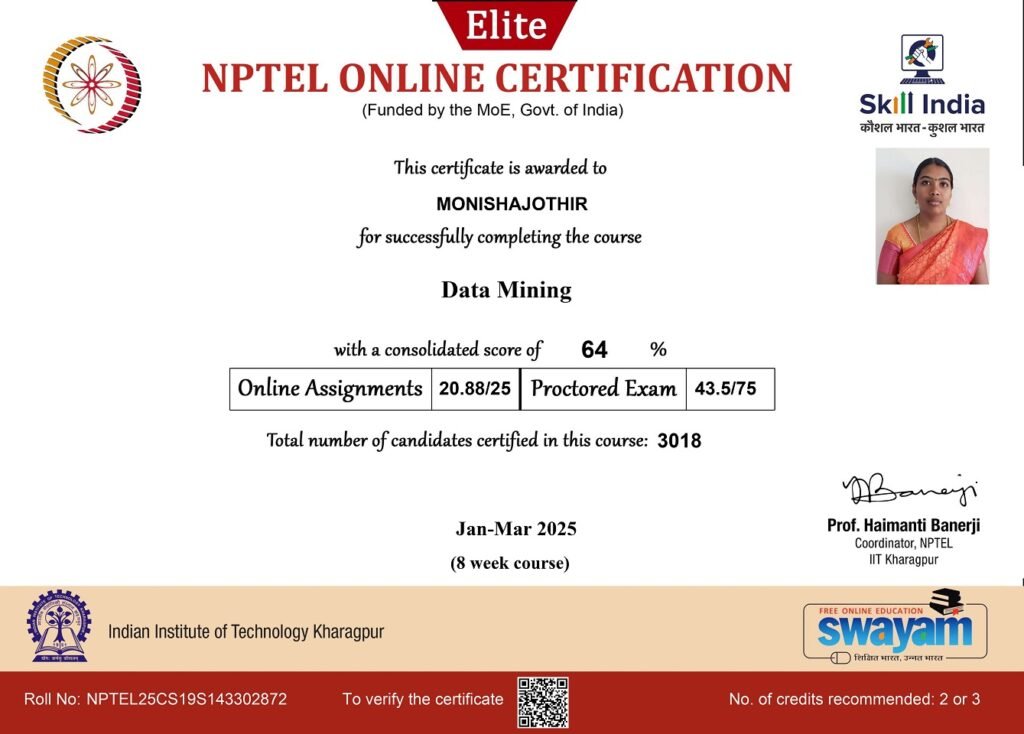
NPTEL Elite
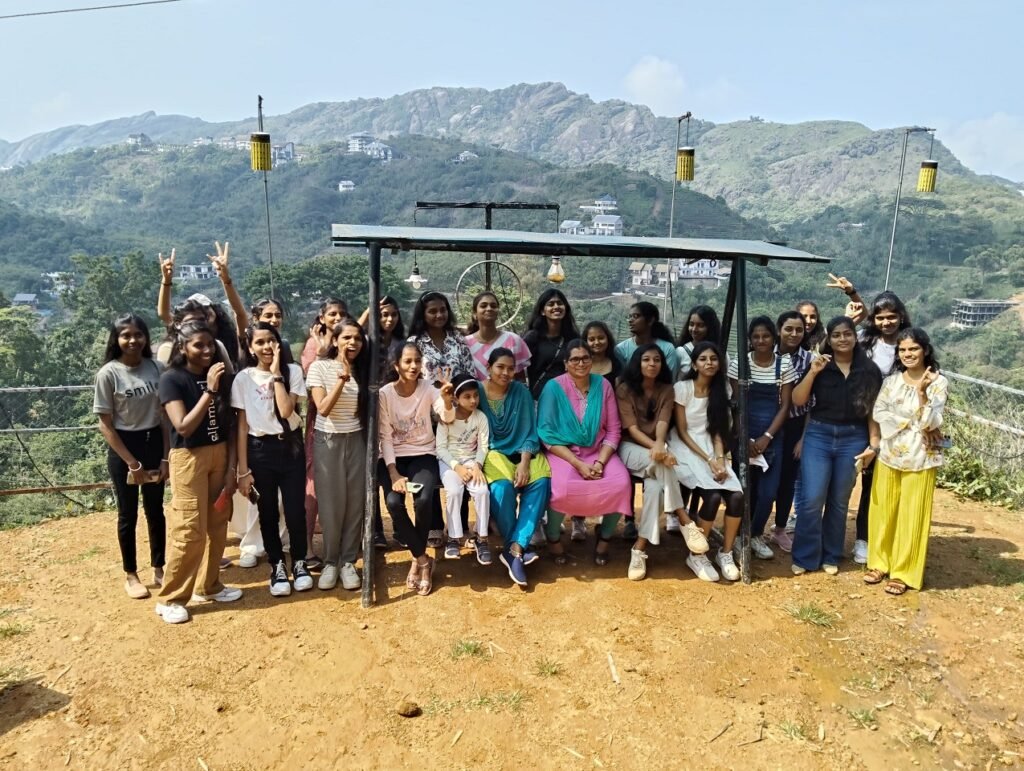
Kochi
PO1: Engineering Knowledge: Apply knowledge of mathematics, natural science, computing, engineering fundamentals and an engineering specialization as specified in WK1 to WK4 respectively to develop to the solution of complex engineering problems.
PO2: Problem Analysis: Identify, formulate, review research literature and analyze complex engineering problems reaching substantiated conclusions with consideration for sustainable development. (WK1 to WK4)
PO3: Design/Development of Solutions: Design creative solutions for complex engineering problems and design/develop systems/components/processes to meet identified needs with consideration for the public health and safety, whole-life cost, net zero carbon, culture, society and environment as required. (WK5)
PO4: Conduct Investigations of Complex Problems: Conduct investigations of complex engineering problems using research-based knowledge including design of experiments, modelling, analysis & interpretation of data to provide valid conclusions. (WK8)
PO5: Engineering Tool Usage: Create, select and apply appropriate techniques, resources and modern engineering & IT tools, including prediction and modelling recognizing their limitations to solve complex engineering problems. (WK2 and WK6)
PO6: The Engineer and The World: Analyze and evaluate societal and environmental aspects while solving complex engineering problems for its impact on sustainability with reference to economy, health, safety, legal framework, culture and environment. (WK1, WK5, and WK7)
PO7: Ethics: Apply ethical principles and commit to professional ethics, human values, diversity and inclusion; adhere to national & international laws. (WK9)
PO8: Individual and Collaborative Team work: Function effectively as an individual, and as a member or leader in diverse/multi-disciplinary teams.
PO9: Communication: Communicate effectively and inclusively within the engineering community and society at large, such as being able to comprehend and write effective reports and design documentation, make effective presentations considering cultural, language, and learning differences
PO10: Project Management and Finance: Apply knowledge and understanding of engineering management principles and economic decision-making and apply these to one’s own work, as a member and leader in a team, and to manage projects and in multidisciplinary environments.
PO11: Life-Long Learning: Recognize the need for, and have the preparation and ability for i) independent and life-long learning ii) adaptability to new and emerging technologies and iii) critical thinking in the broadest context of technological change.
PSO1 : Students will be able to comprehend, evaluate, and create computer applications and programs to meet societal requirements.
PSO2 : Students shall have the skills and knowledge to develop software projects in the latest tools and technologies.
PEO2: Shall function as an effective team member in the professional practice, shall exhibit leadership abilities, professional ethics, communication skills, and interpersonal skills.
PEO3: Shall utilize basic competencies in problem solving, analysis, synthesis, and innovation who shall contribute to the advancement of their society and the Nation.
• Emerge as To develop into a renewed reputable department for generating globally competent Computer Science Engineers dedicated to societal progress.
• Infrastructure and Curriculum Development: Excellent infrastructure and innovative curriculum to meet global requirements.
.
• Skill Development: Organize workshops, seminars, and hands-on training sessions to equip students with the required technical skills. Also emphasize the development of soft skills like communication, leadership, and teamwork.
• Research, Innovation, and Collaboration: Encourage students and faculty to engage in ground-breaking research and innovative projects in association with Industry.