New Prince Shri Bhavani College of Engineering and Technology

Santhosapuram, Chennai
admission@npsbcet.edu.in
044 – 22780404
91526 66333 | 91526 66444
B.E,ARTIFICIAL INTELLIGENCE AND DATA SCIENCE

ARTIFICIAL INTELLIGENCE AND DATA SCIENCE

The Department of Artificial Intelligence and Data Science (AI&DS) offers a four-year program, designed to provide strong foundations in programming, algorithms, mathematics, and specialized courses in machine learning, deep learning, natural language processing (NLP), computer vision, and big data analytics.

With the rapid growth of AI, machine learning, and big data, the department focuses on equipping students with the skills to analyze, design, and develop intelligent systems that address real-world challenges across industries. Through rigorous academics, advanced laboratories, industry partnerships, and research initiatives, the department prepares graduates for successful careers in frontier domains.

The department is equipped with high-performance computing systems and tools for model training and deployment. The students have hands-on training in cloud platforms, IoT applications, and edge computing. Internships, collaborative projects, training programs with IT firms and startups promote digital literacy, AI awareness, and social impact projects.

Faculty members are specialized in machine learning, cryptography, databases, algorithms, web technology, and computer networks. Many are actively engaged in publishing research papers, filing patents, and guiding student projects in emerging AI domains.

Graduates of the department have excelled in careers as data scientists, AI engineers, machine learning specialists, and researchers. Alumni contribute to industries such as finance, healthcare, e-commerce, and defense, reflecting the department’s strong academic and practical foundation.

In brief, the department functions as a hub of innovation and future-focused learning, shaping engineers into skilled professionals who harness the power of AI and data to transform industries and society.

Achievements
Project Expo
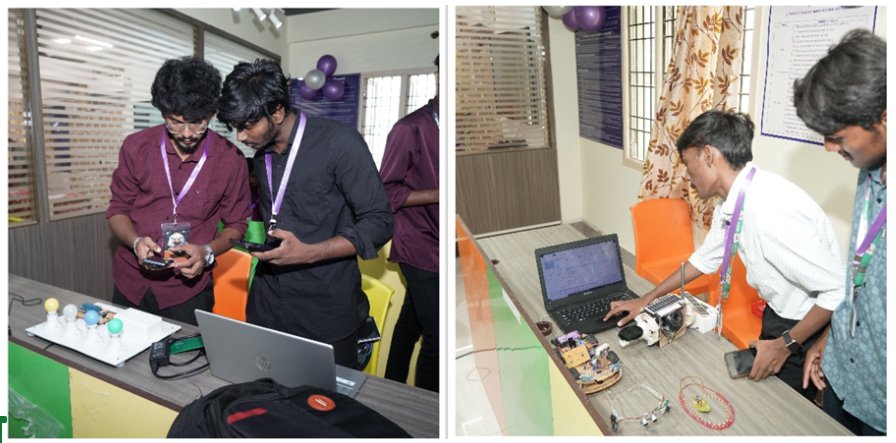
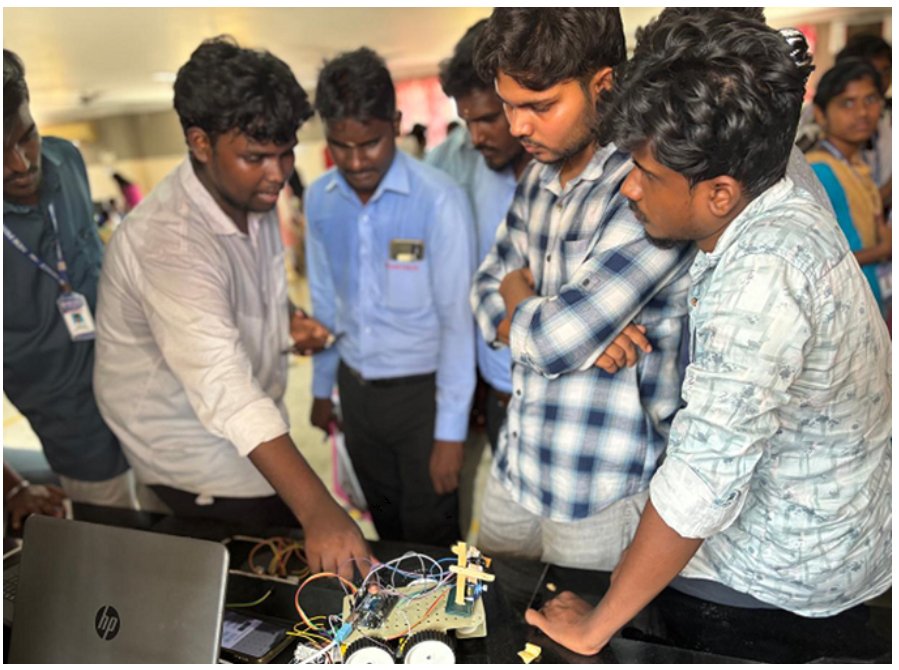
Inter-College Level Project Expo organized by the Department of Electronics and Communication Engineering to showcase innovation and technical skills.
Department of Electronics and Communication Engineering Organized an International Conference to Felicitate Knowledge Sharing, Professional Development and Industry Advancement through Presentation
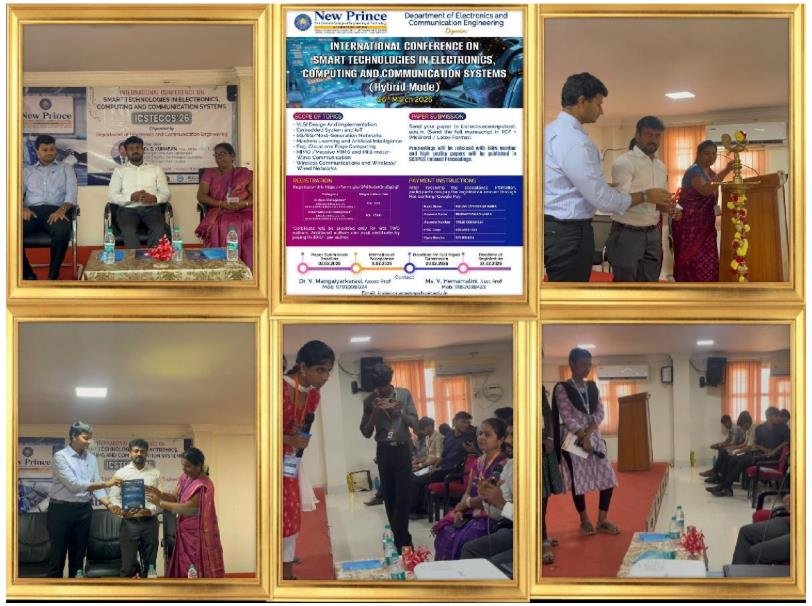
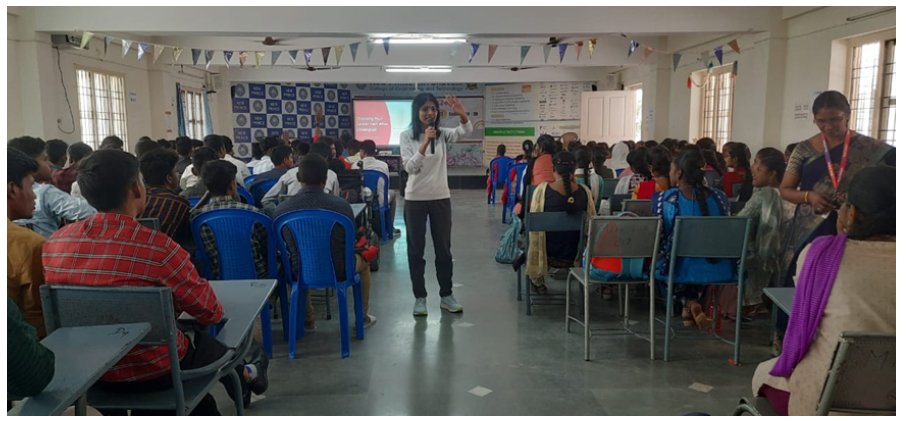
The Department of Electronics and Communication Engineering organized an International Conference on Smart Technologies in Electronics, Computing and Communication Systems in hybrid mode. The conference focused on emerging areas like VLSI, IoT, AI, and 5G/6G, with participants presenting research and sharing ideas. It provided a valuable platform for knowledge exchange and academic collaboration.
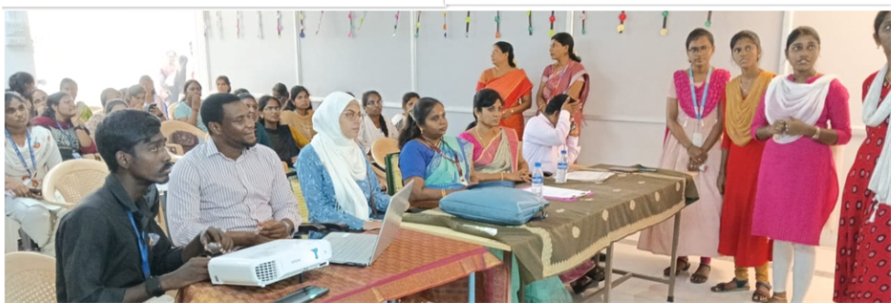
Department of Electronics and Communication Engineering organized a Two Days Workshop on “IoT and Embedded Systems using Raspberry Pi” by ReTech Solutions Pvt. Ltd., Chennai.
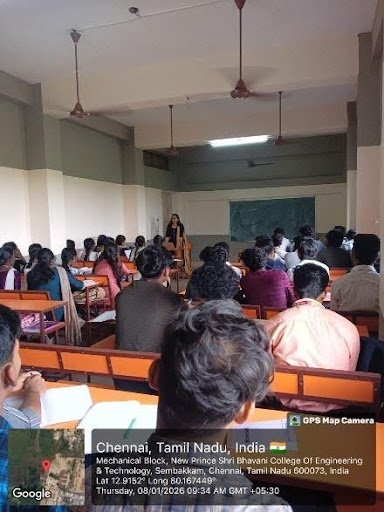
Department of Electronics and Communication Engineering organized a Seminar on “Research Opportunities in Semiconductor materials and Devices” for III year and IV year students. The session was handled by Resource Person Ms.V. Rajakumari, Senior research Fellow in Need laboratory, IIITDM-Kancheepuram, Chennai.
Department of Electronics and Communication Engineering Organized a National level Technical Symposium event that offered an excellent platform to enhance my technical knowledge and gain meaningful learning experience.
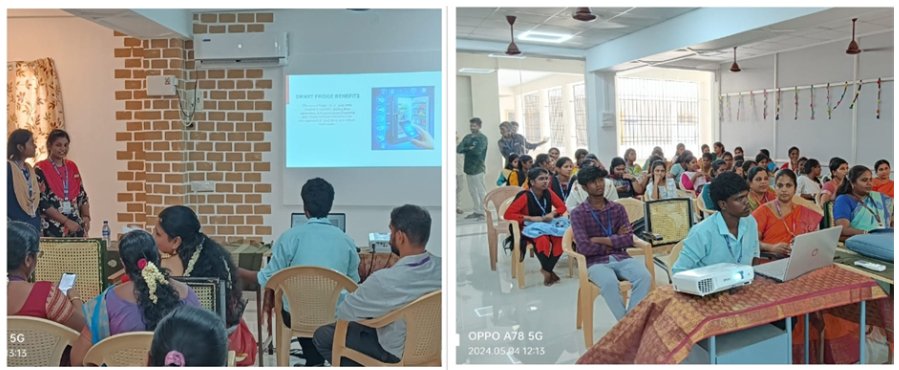
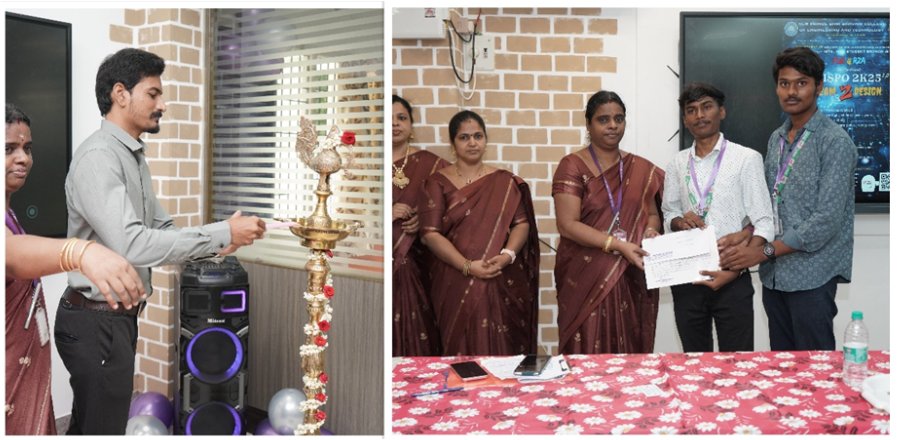
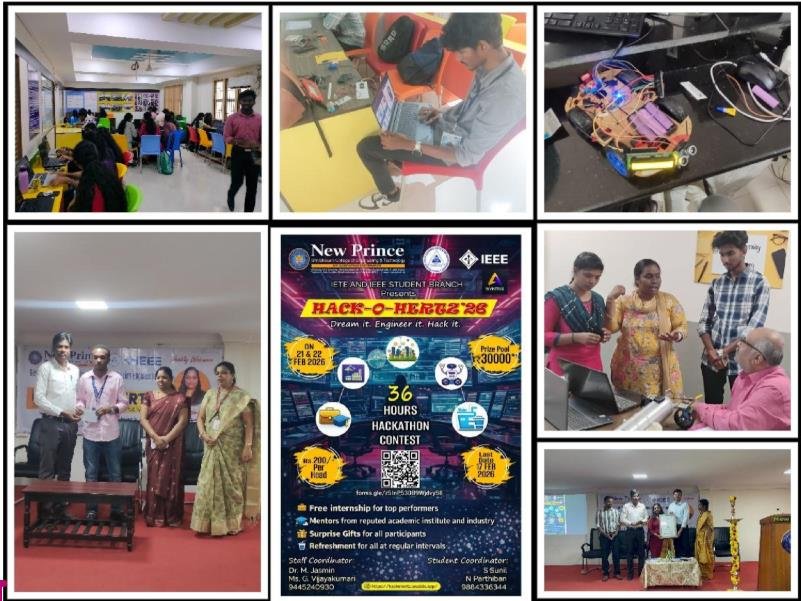
The Department of Electronics and Communication Engineering organized HACK-OHERTZ 2026, a National Level Technical Hackathon in association with the IEEE Student Branch and IETE Student Forum. The event encouraged innovation and problem-solving, with students developing solutions in areas like AI, IoT, and embedded systems. It provided a valuable platform for learning, teamwork, and showcasing technical skills.
Events
Project Expo
Inter-College Level Project Expo organized by the Department of Electronics and Communication Engineering to showcase innovation and technical skills.
Department of Electronics and Communication Engineering Organized an International Conference to Felicitate Knowledge Sharing, Professional Development and Industry Advancement through Presentation
The Department of Electronics and Communication Engineering organized an International Conference on Smart Technologies in Electronics, Computing and Communication Systems in hybrid mode. The conference focused on emerging areas like VLSI, IoT, AI, and 5G/6G, with participants presenting research and sharing ideas. It provided a valuable platform for knowledge exchange and academic collaboration.
Department of Electronics and Communication Engineering organized a Two Days Workshop on “IoT and Embedded Systems using Raspberry Pi” by ReTech Solutions Pvt. Ltd., Chennai.
Department of Electronics and Communication Engineering organized a Seminar on “Research Opportunities in Semiconductor materials and Devices” for III year and IV year students. The session was handled by Resource Person Ms.V. Rajakumari, Senior research Fellow in Need laboratory, IIITDM-Kancheepuram, Chennai.
Department of Electronics and Communication Engineering Organized a National level Technical Symposium event that offered an excellent platform to enhance my technical knowledge and gain meaningful learning experience.
The Department of Electronics and Communication Engineering organized HACK-OHERTZ 2026, a National Level Technical Hackathon in association with the IEEE Student Branch and IETE Student Forum. The event encouraged innovation and problem-solving, with students developing solutions in areas like AI, IoT, and embedded systems. It provided a valuable platform for learning, teamwork, and showcasing technical skills.

Message from the Head of the Department

As the Head of the Department of Artificial Intelligence and Data Science, it is my pleasure to highlight the vision and strengths of our department at New Prince Shri Bhavani College of Engineering and Technology. Established in 2023, the department was founded with the objective of delivering quality, industry-relevant education in the rapidly evolving fields of artificial intelligence and data science. Our department is fully equipped with modern laboratories, high-speed internet facilities, and a dedicated departmental library that support effective teaching, learning, and research. The curriculum is thoughtfully designed to provide students with a strong foundation in mathematics, computing fundamentals, artificial intelligence, data science, machine learning, and allied domains, enabling them to meet real-world technological challenges with confidence.

Our department is supported by a team of qualified and committed faculty members who actively engage in teaching, research, and industry interaction. Emphasis is placed on experiential learning through laboratory work, projects, internships, and industry-oriented activities. Students are encouraged to participate in workshops, hackathons, certifications, technical competitions, and research initiatives to enhance their technical and professional skills. In addition to academic excellence, the department promotes ethical values, teamwork, communication skills, and lifelong learning. With a strong focus on innovation, employability, and societal relevance, the Department of Artificial Intelligence and Data Science strives to nurture competent graduates who can excel in industry, higher education, research, and entrepreneurial endeavors, contributing meaningfully to technological advancement and societal development.

Dr. S. Brintha Rajakumari, M.E.,Ph.D.,

Professor & Head

Department of Artificial Intelligence and Data Science

New Prince Shri Bhavani College of Engineering & Technology

Vengaivasal Main Road, Gowrivakkam, Chennai – 600073.

INDUSTRIAL VISIT

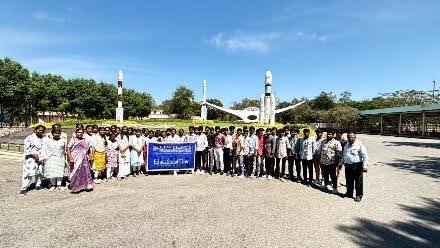
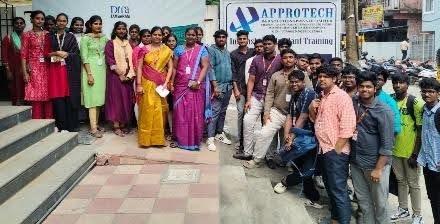
II year and III year students of ECE Department visited Madras Atomic Power Station (MAPS), Kalpakkam as part of an industrial visit, gaining valuable insights into power generation and safety systems

III year students of ECE Department visited UNOMINDA, Sriperumbudur as part of Industrial Visit

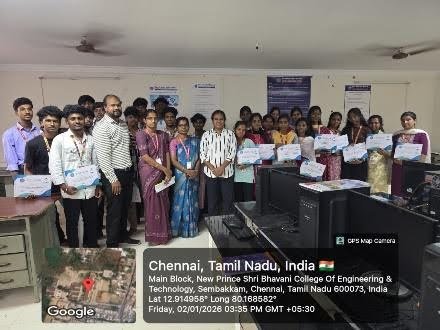
Department of ECE Organized VAC COURSE on “VLSI DIGITAL DESIGN: FROM CONCEPT TO SIMULATION -1.0” for III and II year ECE students handled by   Taras Systems and Solutions, Coimbatore.

The Department of Electronics and Communication Engineering organized an industrial visit to Vee Technologies, Chennai, for II and III year students. The visit provided exposure to industry practices, real-time projects, and domains like IT services and engineering solutions. It helped students understand practical applications and prepare for future career opportunities.

The Value Added Course “VLSI Digital Design: From Concept to Simulation – 1.0” was conducted for II ECE students in collaboration with Taras Systems and Solutions. The course provided fundamental knowledge of VLSI design, Verilog, and hands-on simulation experience. It helped students gain practical skills and better prepare for careers in the VLSI domain.

Infrastructures
Project Expo
Inter-College Level Project Expo organized by the Department of Electronics and Communication Engineering to showcase innovation and technical skills.
Department of Electronics and Communication Engineering Organized an International Conference to Felicitate Knowledge Sharing, Professional Development and Industry Advancement through Presentation
The Department of Electronics and Communication Engineering organized an International Conference on Smart Technologies in Electronics, Computing and Communication Systems in hybrid mode. The conference focused on emerging areas like VLSI, IoT, AI, and 5G/6G, with participants presenting research and sharing ideas. It provided a valuable platform for knowledge exchange and academic collaboration.
Department of Electronics and Communication Engineering organized a Two Days Workshop on “IoT and Embedded Systems using Raspberry Pi” by ReTech Solutions Pvt. Ltd., Chennai.
Department of Electronics and Communication Engineering organized a Seminar on “Research Opportunities in Semiconductor materials and Devices” for III year and IV year students. The session was handled by Resource Person Ms.V. Rajakumari, Senior research Fellow in Need laboratory, IIITDM-Kancheepuram, Chennai.
Department of Electronics and Communication Engineering Organized a National level Technical Symposium event that offered an excellent platform to enhance my technical knowledge and gain meaningful learning experience.
The Department of Electronics and Communication Engineering organized HACK-OHERTZ 2026, a National Level Technical Hackathon in association with the IEEE Student Branch and IETE Student Forum. The event encouraged innovation and problem-solving, with students developing solutions in areas like AI, IoT, and embedded systems. It provided a valuable platform for learning, teamwork, and showcasing technical skills.

PROGRAM EDUCATIONAL OBJECTIVES (PEOs)

Within three to five years, our graduates of the Computer Science and Engineering  program are expected to:

PEO1:  Shall get employed in National and Global Industries or continue their higher education at prestigious institutions.

PEO2:  Shall function as an effective team member in the professional practice, shall exhibit leadership abilities, professional ethics, communication skills, and interpersonal skills.

PEO3:  Shall utilize basic competencies in problem solving, analysis, synthesis, and innovation who shall contribute to the advancement of their society and the Nation.

PROGRAM OUTCOMES (POs)

PO 1: Engineering knowledge: Apply the knowledge of mathematics, science, engineering fundamentals, and an engineering specialization to the solution of complex engineering problems.

PO 2: Problem analysis: Identify, formulate, review research literature, and analyze complex engineering problems reaching substantiated conclusions using first principles of mathematics, natural sciences,  and engineering sciences.

PO 3: Design/development of solutions:  Design  solutions  for complex engineering problems and design systems

components or processes that meet the specified needs with appropriate consideration for the public health and safety, and the cultural, societal, and environmental considerations.

PO 4: Conduct investigations of complex problems: Use research-based knowledge and research methods, including design of experiments, analysis and interpretation of data, and synthesis of the information to provide valid conclusions.

PO 5: Modern tool usage: Create, select, and apply appropriate techniques, resources, and modern engineering limitations.

PO 6: The engineer and society: Apply reasoning informed by the contextual knowledge to assess societal, health, safety, legal, and cultural issues and the consequent responsibilities relevant to the professional engineering practice.

PO 7: Environment and sustainability: Understand the impact of the professional engineering solutions in societal and environmental contexts, and demonstrate the knowledge of, and need for, sustainable development.

PO 8: Ethics: Apply ethical principles and commit to professional ethics and responsibilities and norms of the engineering practice.

PO  9: Individual and team work: Function effectively as an individual, and as a member or leader in diverse teams,  and in multidisciplinary settings.

PO10: Communication: Communicate effectively on complex engineering activities with the engineering community and with society at large, such as being able to comprehend and write effective reports and design documentation, make effective presentations, and give and receive clear instructions.

PO11: Project management and finance: Demonstrate knowledge and understanding of the engineering and management principles and apply these to one’s own work, as a member and leader in a team, to manage projects and in multidisciplinary environments.

PO12: Life-long learning: Recognize the need for, and have the preparation and ability to engage in independent and life-long learning in the broadest context of technological change.
PROGRAM SPECIFIC OUTCOMES (PSOs)

Students of the Computer Science and Engineering  Program:

PSO1 :  Students will be able to comprehend, evaluate, and create computer applications and programs to meet societal requirements.

PSO2 :  Students shall have the skills and knowledge to develop software projects in the latest tools and technologies.

Within three to five years, our graduates of the Computer Science and Engineering  program are expected to:

Our Vision


• Emerge as To develop into a renewed reputable department for generating globally competent Computer Science Engineers dedicated to societal progress.

Our Mission


• Infrastructure and Curriculum Development: Excellent infrastructure and innovative curriculum to meet global requirements. .

• Skill Development: Organize workshops, seminars, and hands-on training sessions to equip students with the required technical skills. Also emphasize the development of soft skills like communication, leadership, and teamwork.

• Research, Innovation, and Collaboration: Encourage students and faculty to engage in ground-breaking research and innovative projects in association with Industry.